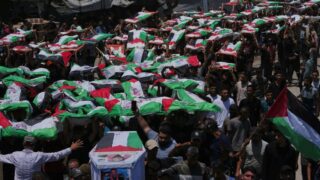
It is necessary to examine the practical effectiveness of widespread popular support, both in our region and globally, for armed resistance against ongoing Israeli aggression in Palestine and Lebanon. Not because such support is insincere, but because Israel and the United States are not deterred by declining popularity or widespread condemnation. This is compounded by the silence and complacency of Western authorities and the overt complicity of many Arab regimes.
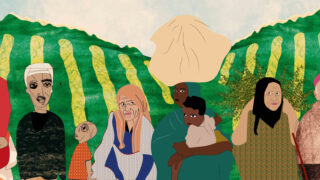
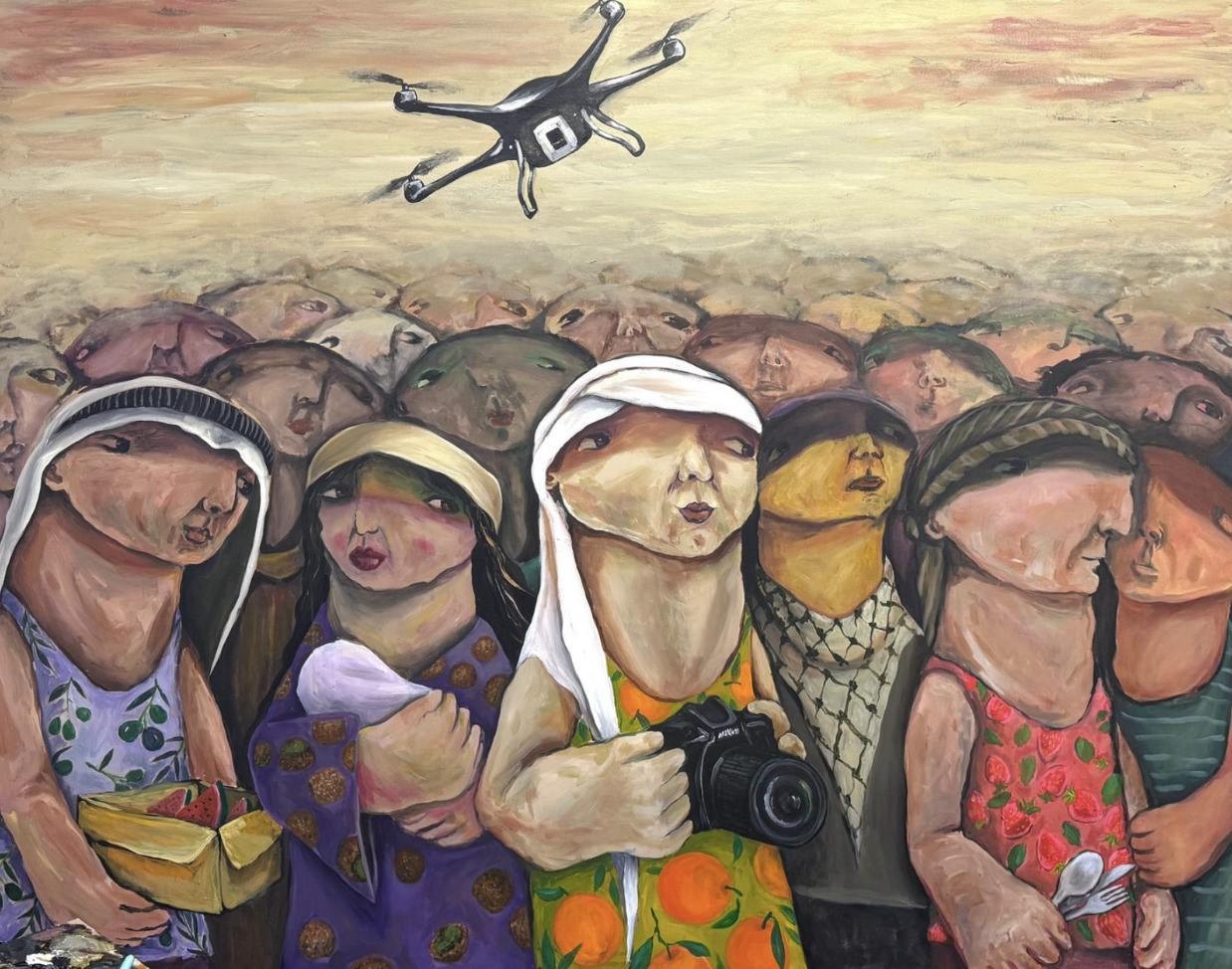
This popular support reflects the pulse of people worldwide. Gaza, literally “genocided”, has shown unimaginable resilience. It is rebuilding amid ruins despite continued carnage, albeit in lesser intensity than that we’ve witnessed over the past 2.5 accursed years, in which 95% of schools and all universities were destroyed. Today, education continues in improvised settings among the ruins, led purely by volunteer teachers who make sure that elementary education, in the least, is not interrupted. Healthcare also persists despite the killing or arrest of doctors and the lack of medicine, as remaining health care workers and doctors do wonders with what little they have. Gaza has thus become a symbol — of unchecked Israeli brutality, but also of resilience, resistance, renewal, and refusal of this abomination, in a world lacking any balance of power that may deter the monsters.
Elsewhere in the region, societies face despair, fear, and fragmentation following repeated defeats in the battles they fought to gain or maintain rights. Institutions that provide the frameworks to popular action, such as parties and unions, have collapsed, either due to their incompetence or, at best, their formalism (that amounts to little beyond adopting official stances). Those same institutions are also weakened by repression, compromise, and corruption, suppressing critical and revolutionary thought and elevating ineffective, cowardly, or even corrupt leadership. By varying degrees, this is a global trend in today’s world.
In Lebanon, widespread destruction and loss have deepened suffering. People have lost all that is dear to them, materially and emotionally: people killed, land and homes destroyed by the enemy’s large-scale, systemic demolishing of villages and towns, including Bint Jbeil, the city that rightly possesses a distinct place in the south of Lebanon. Israeli threats of prolonged occupation, propelled by Israel’s unhinged behaviour, add to the crisis.
So how can a comprehensive response to current realities take shape when the prevailing norm in Lebanon (and elsewhere) reflects a troubling regression into primitive tribalism and extreme individualism? It is a regression that shadows the deep misery weighing on the country, while its acknowledged “role”, upon which Lebanon was founded, has become obsolete.
The signs of this erosion are glaringly visible now, stripped of the intellectual and theoretical frameworks that once made those “values” part of the country’s identity, reliant on a political “settlement” that distributed power and wealth among sectarian and regional factions. Today, little remains of that arrangement, with whatever scarce resources left getting snatched by a small, looting elite that holds power.
This plunder of resources happens through “legitimate” mechanisms (such as exorbitant taxes imposed without the provision of even the most basic public services, which is one of many examples), and illegitimate (yet socially tolerated) ways, in which people “know” and suffice with complaining about brokerage and opportunism of all kinds - also one of many examples. The plunder of resources is also possible through factionalism, where contending for dominance and control, frequently violent, is justified under the guise of correcting sectarian “imbalances” or quotas.
The current global trend toward “mafiosi” brutality reflects “the highest stage of capitalism”, as opposed to what a famous intellectual once attributed to imperialism. Capitalism, instead, reinvented itself by taking a big step backward, combining dystopian technological dominance, imperialism, direct colonialism, and unbridled authoritarianism, beyond all laws and institutions, and with a quality of medieval brutality… It might well be branded as late stage capitalism, with only two possible outcomes: either total destruction of humanity and earth, or a mass awakening that is feared to be.. too late!
The problem that arises is the result of a key contradiction sensed by all: production is no longer central in advanced economies. Industrialism has increasingly eroded, replaced by all kinds of speculation, which provide large and quick profits to a very small elite, always in the spheres of political power, and influential by association. This, of course, entails a violent, aggressive nature that strives to seize and plunder. Sometimes it is done through outright war; sometimes in other methods, namely by co-opting corrupt local figures and propagating narratives that justify corruption, in addition to fueling conflicts that paralyze societies’ ability to resist, stripping every possibility for resistance… Despair, once again - a “material” tool of subjugation.
All of this is accompanied by a phenomenon with profound consequences. People realize, or at least sense, that the world’s laws and driving forces, whether economic, political, cultural, or moral, have undergone deep transformation. Yet many continue to think and act using the tools and frameworks of the past: those they know and have experienced; those which people continue to reproduce even as their frameworks are rendered “out of history”, incapable of meeting even the most basic conditions in reality. Examples of this are numerous.
Resisting all the misery and barbarity has inherent value, however, new conditions commensurate with this new reality have yet to be born.
In France, a country of historical revolutions, political power allied with known oligarchies controls the media. It has persistently worked on ridiculing emancipatory ideas and suppressing news on resistances in all fields. This power itself has worked on controlling education at all levels, through privatization and state curricula adjustments, favoring elitist institutions that cater exclusively to elite students. Public education is rendered a technical practice, devoid of any values or thoughts that encourage questioning a deteriorating reality. Instead, individual survival and academic “achievement” are encouraged as the example and the end goal.
This dynamic is not specific; it is a global trend. Societies are breaking under these pressures, which, despite their objective nature, are promoted through actively ignoring the realities and statistics that reveal their catastrophic results.
In response, grassroots initiatives are emerging against the decline, decay, narrow-mindedness, and blatant selfishness. It is important to highlight those taking initiative to work with people in areas that are essential but neglected by official or specialized institutions. This might help regain some self-confidence and credibility. It is crucial to preserve faith in enlightened ideas that dispel with disgust the quagmire into which we are being driven.
Across our region, initiatives of this kind (of which we know, at least), have provoked the wrath of the authorities. Their organizers have faced accusations, and at times even arrest and imprisonment. Authorities’ suspicion, and their desire to silence any form of resistance, stems from their own impotence and moral decay, which is evident in their abandonment of their societies and their betrayal of promises of stability and prosperity...
Some years ago, a grassroots initiative in Egypt to teach street children to read and write, and to provide them with shelter, prompted the anger of Egyptian authorities. Organizers have been detained over unfounded, fabricated charges, such as the alleged intent to harass the children they sought to help. This pattern has recurred in numerous contexts, particularly in initiatives supporting the most vulnerable groups: women, children, people struggling with addiction, or the unemployed…
These initiatives are, indeed, many. In previous issues of Assafir Al-Arabi, we have documented initiatives whose cost, in some instances, was the assassination of their founders. One such case is that of the late Iraqi activist Yanar Muhammad, who established shelters for abused women, and was assassinated in Iraq. We also highlighted a Sudanese initiative to shroud the dead bodies left in the streets as a result of the ongoing war, preserving their names and, when possible, contacting their families, or at the very least, honoring the dead with respect and dignity.
We don’t want to
10-09-2024
How powerful the bonds forged by such initiatives are, and how vital their role in restoring even a minimal sense of social cohesion. And yet, some self-proclaimed, rhetorical “revolutionaries” look down on them, refusing to imagine or engage in such efforts, and dismissing them as acts that merely belong to the world of “charity”...
Such dangerous blindness to reality.. Awaken! We are facing a catastrophe, and critical thinking stands in stark contrast to what now occupies space with its loud, empty noise.
Translated by Sabah Jalloul