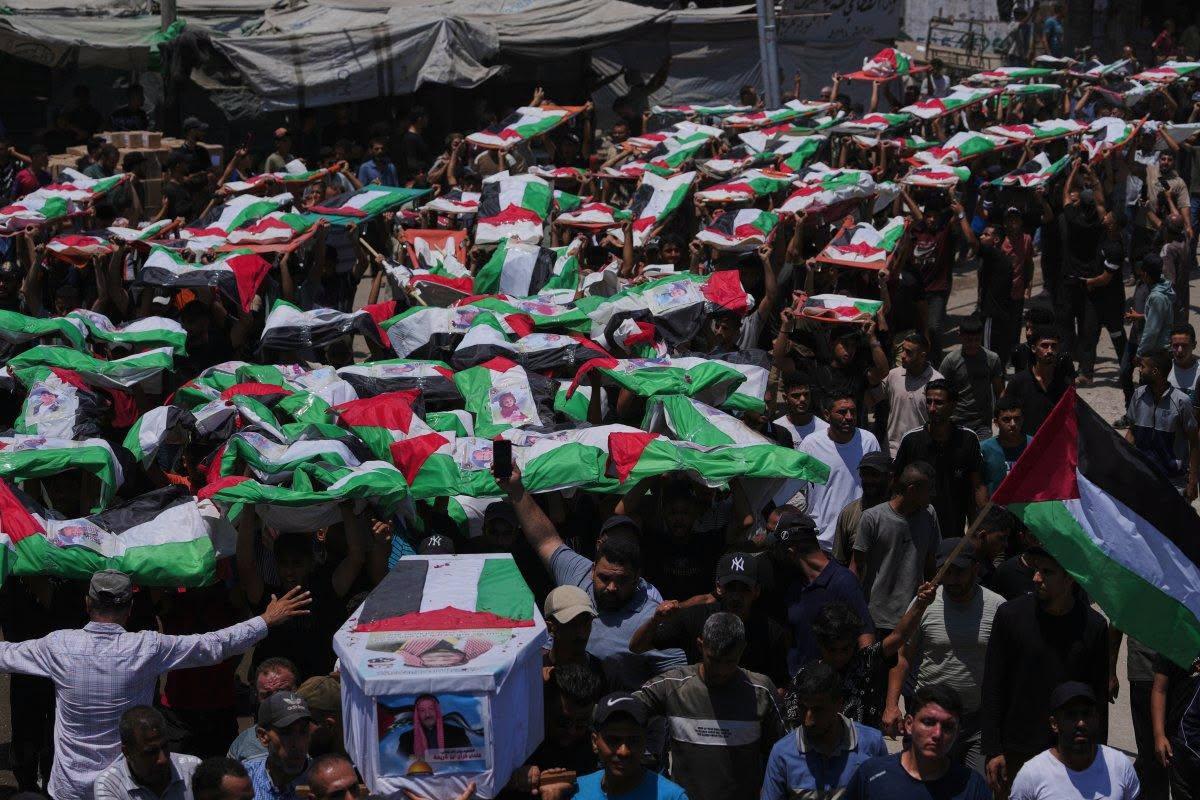
It was no ordinary scene. They said it was the largest funeral in Palestine's history, though they didn't call this event the largest "gathering" of weeping, perhaps it carried the sorrow of the entire world, and the sorrow of all of Gaza over the past three years, gathering them in one small spot in the Sabra neighborhood, south of the besieged city.
The funeral of the Husseina and Abu Shuraia families, held by Gaza, was more than just a funeral. Everyone had been talking about it for days. People watched it and knew they weren't watching a passing funeral, so much as they were watching their own oppression and pain, hidden away for years. Journalists wept, residents wept, women broke down, and children's hearts melted from grief. It was as if a great reservoir of sorrow had burst open, releasing all the pain it held onto every face.
Everyone wept... eyes could no longer hold back the tears, and it brought to mind Ibrahim Nasrallah's words, spoken through one of his novels' heroines: "We needed bigger hearts to hold all this sorrow." People wept among the crowd, even those carrying the remains of their neighbors' and relatives' bodies, since none of the martyrs' original families remained. They were gone, men, children, and women. Their young people were gone too, even their mukhtar, the martyr "Fathi Farraj Abu Shuraia al-Husseina," who had lived at the heart of the residential block, gone along with his children.
It Is Not Just About Gaza and Palestine
18-01-2025
Women scattered flowers and rice over the martyrs' bodies from balconies and behind windows, following a custom of the Palestinian people for decades. My friend Ahmad Ibrahim, describing the scene, said that watching them scatter flowers as their tears kept flowing, he understood for the first time what it truly means when someone says "it makes the heart bleed."
The funeral should have been larger — only 112 martyrs were laid to rest, most of them children and women — yet mourners were also weeping for others they didn't know how to bury. The other 154 martyrs, whose bodies had disintegrated under the force of the missiles when Israeli warplanes bombed the residential block the family had lived in three years earlier (on 22 November 2023) ...
My friend Youssef Fares says: "I asked one of their relatives about the story, and he told me that 300 members of the family — men, women and children — lived in adjoining houses in this block. Drones fired one or two missiles at each house to force them out and displace them, and every family that had evacuated its home gathered in the building of Mukhtar Fathi, the family elder who gave a sense of safety in even the harshest circumstances. Then warplanes dropped dozens of large bombs, and everyone was killed."
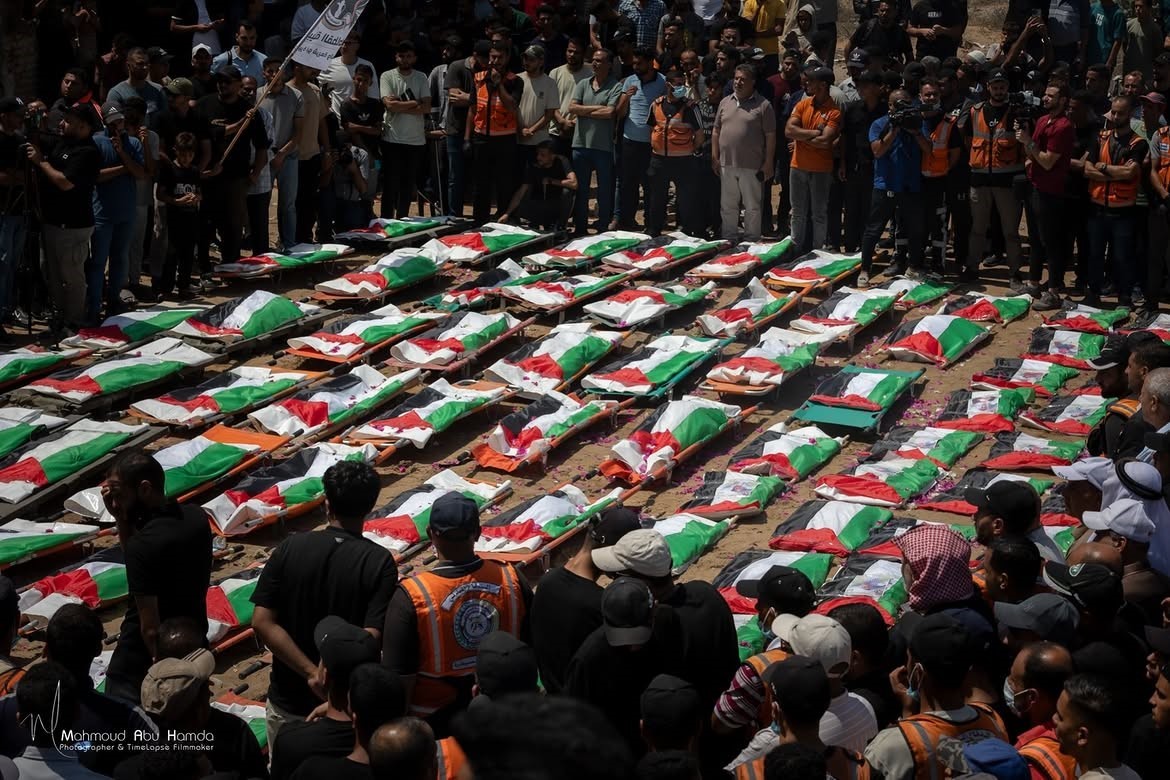
All traces of the block vanished completely under the rubble, and Israel did not allow the recovery of the victims from the day of the massacre. The marks of destruction still bear witness to the human tragedy there, where nothing remains of the homes of these families, wiped out across generations, from grandparents to grandchildren, among them 44 children and 37 women.
Even the photographs of the martyrs that mourners pinned to the bodies no longer matched what lay inside; more than a thousand days had reduced their features to remains, making identification difficult, and pushing people to try to recall where they had lived, or been, or some piece of their clothing, memories, or personal identities.
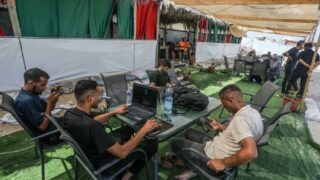
Journalists among themselves sensed the depth of the sorrow in the scene. Everyone in the news-monitoring and coverage groups agreed that sharing and circulating the footage that day would be free of rights, watermarks, or restrictions of privacy. The images and clips would remain free for everyone to circulate and publish, so the world could see the scene of grief that the people of Gaza carried to their dead.
Civil defense teams and rescue crews had begun recovery operations in mid-July, and had not finished by the beginning of this August, announcing to the world that they had managed to find fewer than half of the martyrs who had waited more than a thousand days for their postponed funeral.
My friend Youssef Fares says: "I asked one of their relatives about the story, and he told me that 300 members of the family — men, women and children — lived in adjoining houses in this block. Drones fired one or two missiles at each house to force them out and displace them, and every family that had evacuated its home gathered in the building of Mukhtar Fathi, the family elder who gave a sense of safety in even the harshest circumstances. Then warplanes dropped dozens of large bombs, and everyone was killed".
They are not alone. More than 10,000 other martyrs, like the children of the Husseina and Abu Shuraia families, are still awaiting their funerals, with estimates suggesting this many remain under the rubble, impossible to recover amid the equipment crisis and shortages of fuel and resources. Those the media always refer to simply as a number of missing persons leave behind thousands of relatives, friends, and neighbors, waiting for one last farewell, so they can finally sleep knowing they have buried their loved ones, and that their voices and dreams will no longer call out to them from there, from beneath the rubble, and that memories will no longer plead: "We are still here."
The funeral procession led to a mass grave dug inside al-Ahli Arab Baptist Hospital — the same hospital that was the site of the notorious massacre at the start of the war, the one that marked the beginning of the world's normalization with genocide, and without whose silence the children of the Husseina and Abu Shuraia families would not have died.
People bade them farewell, carrying with them their own joys and memories. They said goodbye and returned once more, carrying their grief and a long, eternal weeping, knowing it would never end — that it would remain an open sorrow, like every deep wound and every absent face still beneath the rubble... until all these postponed funerals come to an end.