
" This file was produced as part of the activities of the Independent Media Network on the Arab World. This regional cooperation brings together Maghreb Emergent, Assafir Al-Arabi, Mada Masr, Babelmed, Mashallah News, Nawaat, 7iber and Orient XXI."
Ikhlas, a 45-year-old woman from Khartoum, did not expect war to erupt just days before the day that promised her recovery. According to her sister, doctors at the Italian Al-Salam Hospital in Khartoum had scheduled her surgery and planned to replace two of her heart valves on April 24, 2023. As the family prepared for her admission, the first gunshots rang out on April 15 just south of the capital, at a location not far from the hospital. All patients awaiting admission were instructed to remain at home until further notice. But things did not calm down, and the situation rapidly descended into a nightmarish chaos.
Like millions of other Sudanese, Ikhlas initially believed the fighting was nothing more than a familiar flare-up between the army and one of its former military arms, the Rapid Support Forces (RSF). She held on to the hope that the violence would subside in time for her treatment. Unfortunately, her already weakened heart could not endure the prolonged delay. Ikhlas passed away weeks later, still clinging to the expectation of a recovery that never happened.
Her sister recalls the family’s desperate attempts to save her. They were forced to transport Ikhlas from one hospital to another using a military vehicle, only to find that most had closed or ceased operations in the early days of the war. In the end, all they could manage to find was an OB/GYN clinic that could not save her. She was pronounced dead at the clinic. Ikhlas’s sister said that amid the chaos engulfing Khartoum, the family was unable to locate her grave until several months later.
Ikhlas was one of countless victims who lost their lives not to bullets, but to the collapse of Sudan’s healthcare system. Many died after being cut off from essential treatment, particularly for chronic conditions. According to the London School of Hygiene & Tropical Medicine (LSHTM), approximately 61,000 people died in Khartoum State during the first 14 months of the war. Of those, 21,000 were killed by direct violent clashes, such as gunfire. Nationwide, hunger and preventable diseases were identified as the leading causes of death, claiming over 35,000 lives.
Arab World: Mental Health, a Political Issue
26-06-2024
Before the war, Khartoum State was home to roughly 15 million people. Today, official state sources estimate the population has fallen to about 6 million, with most residents, 3 million people to be specific, concentrated in the Karary district, near the city of Omdurman.
Decay of the Health Sector
The Ministry of Health has not released official figures on deaths linked to lack of medical care. However, the Sudanese American Physicians Association (SAPA) reports that at least 711,000 patients in Khartoum State, out of more than 2 million, were affected by disruptions to healthcare services. This means that nearly a third of patients were directly impacted by attacks on hospitals, many of which were rendered inoperable in the first few months of the war.
According to SAPA, 70 percent of the damages to hospitals occurred between April and December 2023, primarily in densely populated areas of central and southern Khartoum. Most of the city’s major public and private hospitals are located in central and eastern districts, near the army headquarters and the international airport, which are areas that were rapidly transformed into military zones since the early hours of the war.
The same report indicates that within the first 500 days of fighting, 41 out of the 87 hospitals in Khartoum State; that is almost half of the state’s hospitals, had sustained damage. Half of those facilities were providers of primary healthcare, raising severe short- and long-term public health risks.
On a national level, the Sudanese Ministry of Health estimates that 250, or one-third, of the country’s 750 hospitals have been damaged. A field investigation conducted for this report reveals unprecedented destruction in Khartoum State, where most medical facilities suffered extensive losses, including damage to buildings, medical equipment, and logistical infrastructure.
According to the London School of Hygiene & Tropical Medicine (LSHTM), approximately 61,000 people died in Khartoum State during the first 14 months of the war. Of those, 21,000 were killed by direct violent clashes, such as gunfire. Nationwide, hunger and preventable diseases were identified as the leading causes of death.
Between April 2023 and December 2024, the WHO documented 542 attacks on Sudan’s healthcare system. 122 healthcare workers were killed and dozens were arrested. By February 2025, the death toll among healthcare professionals had risen to 317, according to an updated WHO report.
At Ibrahim Malik Hospital in southern Khartoum, the largest facility under the Khartoum State Ministry of Health, no department was spared. Vandalism and destruction ravaged the once-leading center for brain and neurological surgery in Sudan. During our visit, we observed the indiscriminate vandalism of a multi-million-dollar CT scanner, which had been destroyed solely to extract its copper wiring. The trade in scrap copper, selling for less than $5 per kilogram, has flourished amid the war, with devastating consequences, including on the power infrastructure.
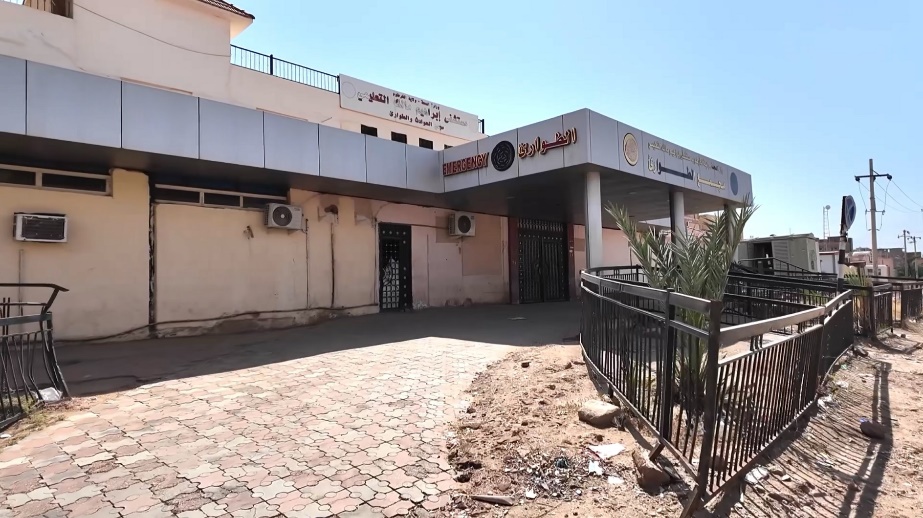
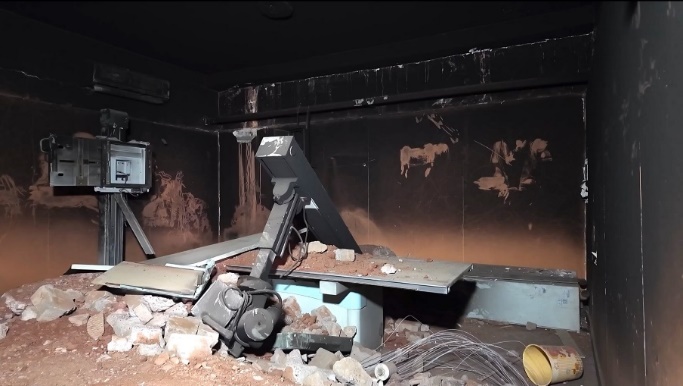
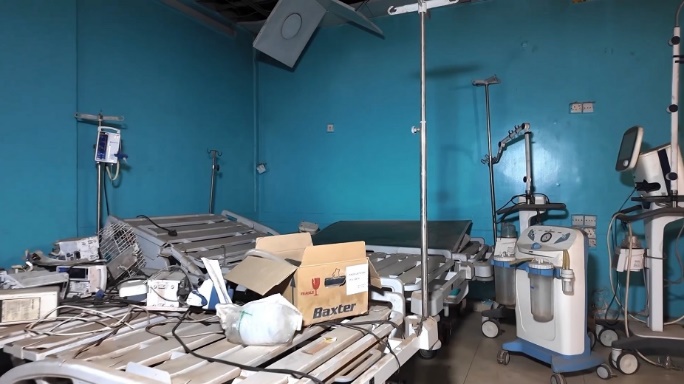
At Ibrahim Malik Hospital: The radiology room was reduced to a pile of rubble (right), and an intensive care unit was left destroyed (left).
Central Khartoum, where the city’s main hospitals and clinics are located, appeared abandoned during our visit, as if it had never been inhabited. Originally a non-residential zone neighboring the army headquarters, the area eerily demonstrated nearly no signs of life.
According to Ministry of Health figures, approximately 28,000 new cancer cases are diagnosed annually in Sudan. Al-Dhara Hospital largely escaped physical destruction during the war and a representative of the Ministry of Health has reported that its radiotherapy equipment remains intact. However, its ability to regain its operations remains uncertain due to the lack of basic services, including water, electricity, and sanitation.
The entire State of Khartoum now virtually lacks an MRI machine. Omdurman Hospital is seeking to acquire one, while also working to reopen its intensive care unit. The crisis is reflected in the flood of social media posts from families desperately searching for available intensive care beds for family members.
Al-Shaab Hospital, one of the capital’s largest medical facilities and one of Sudan’s leading teaching hospitals, remains unable to resume its regular operations, despite ongoing efforts to rehabilitate. Before the war, the hospital’s large capacity and advanced facilities allowed it to host and treat thousands of patients from across the country. The most recent pre-war data indicate that Al-Shaab Hospital provided medical treatment to more than 1,000 cardiovascular patients each day.
In close vicinity to Al-Shaab Hospital is Al-Dhara Hospital, Sudan’s primary cancer treatment center. Given the high cancer rates nationwide, the hospital had always received patients from all provinces and had long struggled with chronic overcrowding. Waiting lists routinely grew so long that some patients lost their lives before getting the chance to receive treatment. According to Ministry of Health figures, approximately 28,000 new cancer cases are diagnosed annually in Sudan. Al-Dhara Hospital was largely spared physical destruction during the war and a representative of the Ministry of Health has reported that its radiotherapy equipment remains intact. However, its ability to regain its operations remains uncertain due to the lack of basic services, including water, electric power, and sanitation.
On the other hand, hospitals that the RSF used to treat their wounded were hardly damaged. Even facilities that had temporarily ceased operations were able to resume services in record time. These include Al-Bashair Hospital in southern Khartoum and Al-Tamayyoz Hospital, located in the middle-south of Khartoum.
The Ministry of Health estimates total losses to the public and private healthcare sector in the Khartoum State at $12 billion. In a recent report, the state ministry revealed that 75 percent of hospitals, both public and private, were damaged and rendered inoperable due to direct bombardment. Many of these facilities have been converted into military barracks by the RSF, which seized control of Khartoum in the early days of the conflict. The ministry further reports that 90 percent, or 73 out of 80, of private hospitals were damaged in the State. In addition, 5 pharmaceutical laboratories, 2,300 pharmacies, and 450 medical supply companies were forced out of service.
Between April 2023 and December 2024, the World Health Organization (WHO) documented 542 attacks on Sudan’s healthcare system. During that period, 122 healthcare workers were killed and dozens more were arrested. By February 2025, the death toll among healthcare professionals had risen to 317, according to an updated WHO report.
The Ministry of Health warns that the system will face extreme strain if large numbers of displaced residents return to Khartoum, while most medical facilities remain closed, essential medicines are in short supply, and power outages persist.
Attempts to Compensate for Losses
These enormous losses in the health sector led to a near paralysis of basic medical services in Khartoum, the country’s pre-war hub for health care services and a region that had previously benefited from decades of centralization under successive Sudanese governments. As healthcare in the capital collapsed, services in other regions suffered. Health services in Darfur deteriorated after the region came under the control of the RSF, after the militia advance into Khartoum.
Dr. Ahmad Al-Bashir, Director of Preventive Medicine Department, confirmed that the rehabilitation and reopening of hospitals and medical centers is being prioritized in densely populated areas, rather than based on the pre-war distribution and conditions of health facilities.
According to WHO reports from March 2025, more than 20 million Sudanese face urgent humanitarian needs. The crisis has been classified as the world’s largest displacement emergency, with approximately 12 million people displaced, 53 percent of them children. Half of the Sudan’s population is grappling with severe food insecurity.
When military operations made it impossible to continue providing healthcare in the capital, Wad Madani, the capital of Al-Jazirah State in central Sudan, emerged as an alternative medical center. Prior to the war, Al-Jazirah had relatively strong medical infrastructure. This allowed it to temporarily absorb the overflow of patients from Khartoum during the war. A substantial number of patients traveled there to resume their treatment, while specialist clinics and physicians relocated their practices to the city.
That fragile lifeline collapsed in late 2023, when the RSF took control of Al-Jazirah State. Access to wholesome healthcare in central Sudan became impossible, and the Ministry of Health announced that the fate of a stockpile of medical drugs valued at approximately $20 million had become unknown.
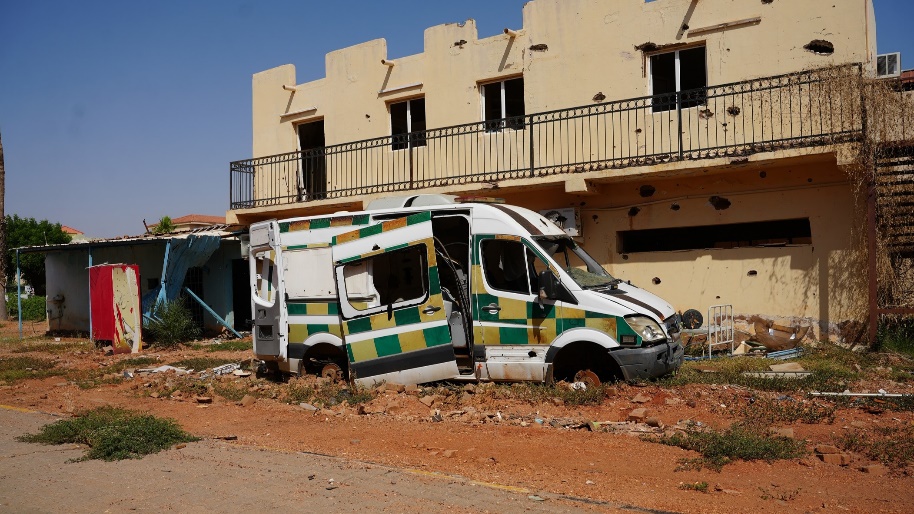
These realities had catastrophic impacts on healthcare services, from basic care to advanced treatment. The spread of the conflict from Khartoum to Al-Jazirah and then to Sennar State in the southeast further deteriorated the situation. Although the army has since regained control of some areas, those regions now face acute shortages of essential public services, such as electric power, water, and sanitation.
Khartoum is exemplary of the situation in these recaptured areas. The government appears to lack a clear executive plan or an emergency framework to restore healthcare services. With the lack of funding and the persistence of military operations in other regions, any meaningful recovery remains contingent on negotiations or a ceasefire that could open a path toward a broader political settlement.
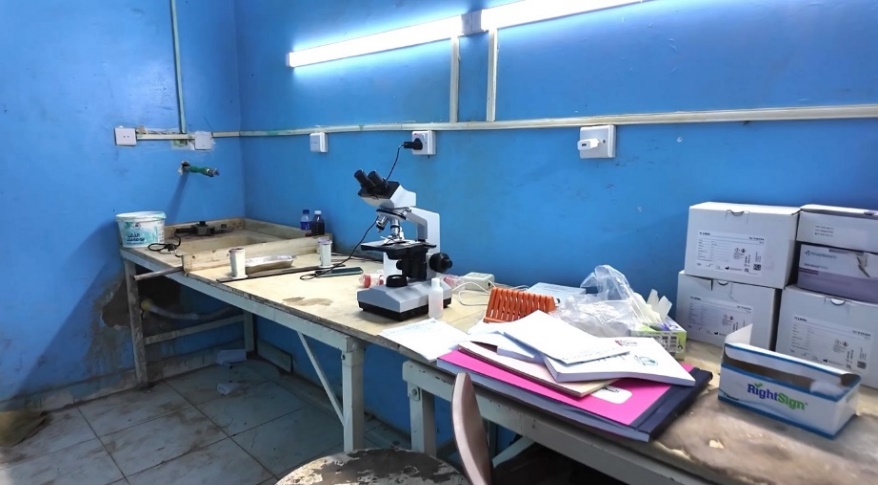
Despite all the constraints, medical facilities in Wad Madani, the capital of Al-Jazirah State, recaptured by the army in January 2025, are attempting to restore an acceptable level of services. Local authorities estimate losses to the health sector at $63 million in the state. The centrally located Al-Jazirah State had served as a primary destination for Sudanese fleeing the war and later became the only destination after the RSF seized Khartoum. When fighting eventually reached the state, health services collapsed, and Wad Madani and its surrounding areas were largely emptied of residents, including medical personnel.
Dr. Osama Abdel Rahman, Director General of Health in Al-Jazirah State, says the sector has suffered extensive damage. He explains that the main obstacles to resuming operations are the shortage of medical staff and persistent power outages. In an interview, Dr. Abdel Rahman has stated that while the ministry has managed to restore a number of services, the need for support remains paramount, particularly in light of widespread looting and vandalism of medical equipment, vehicles, and electrical transformers. To address staffing shortages, the Ministry of Health has recruited contractual medical personnel, meeting approximately 75 percent of its needs, according to Dr. Abdel Rahman.
Our field observation of Wad Madani confirmed a partial resumption of services. The chemotherapy center has reopened, but the radiotherapy department remains closed, forcing cancer patients to travel to the Merowe region in the far north for treatment. Al-Jazirah Hospital, which specializes in kidney diseases, has resumed dialysis sessions, though transplant procedures are not possible. Surgical operations remain unstable, and at the cardiology center, only outpatient consultations are currently available at one of the largest specialized facilities on the African continent. The center has been widely looted during a year of war in the state. Meanwhile, gynecology, pediatrics, maternity wards, and the general hospital are operating normally.
Dr. Abdel Rahman also notes that vaccination programs, nutrition services, maternal health, and mental health care have all been disrupted. The ministry has recorded a rise in childhood illnesses and maternal mortality. He reports that Al-Jazirah State recorded 30 maternal deaths in 2024, a figure that fell to four in 2025. Official estimates suggest the state’s population reached nearly 12 million during the peak of displacement, as millions fled the war. Following the army’s recapture of Al-Jazirah, the population has dropped to approximately 6 million, most of them Al-Jazirah natives.
It became obvious that conditions in Al-Jazirah were comparatively better than in Khartoum, where only limited medical services are being restored, or in Omdurman, where the situation remains precarious. Omdurman, one of the three cities forming the capital’s metropolitan area, was not engulfed by fighting to the same extent as Khartoum and Bahri. Nevertheless, the deep scars of war were evident on many healthcare facilities. The RSF controlled the western part of the city and the older neighborhoods in the south, while the army maintained control of the north. Hospitals located in RSF-controlled areas were largely put out of service, including Omdurman Teaching Hospital.
That hospital later resumed operations with direct support from the King Salman Humanitarian Aid and Relief Center (KSRelief), as well as assistance from the local population. Dr. Abdel Moneim Ali, director of Omdurman Hospital, says all services have now resumed, noting that the facility now offers treatments that were unavailable before the war, including specialized care for pancreatic diseases, as though the Ministry of Health was attempting to compensate for the collapse of services in Khartoum. After over one year of closure, Omdurman Hospital resumed services in October 2024.
However, the entire State of Khartoum now virtually lacks an MRI machine. Only a single machine remains operational, installed at a center on the outskirts of Omdurman. Patients are forced to book appointments far in advance and wait for weeks. Omdurman Hospital is seeking to acquire an additional MRI machine, while also working to reopen its intensive care unit, amid an acute shortage of both diagnostic imaging and ICU beds. The crisis is reflected in the flood of social media posts from families desperately searching for available intensive care beds for family members.
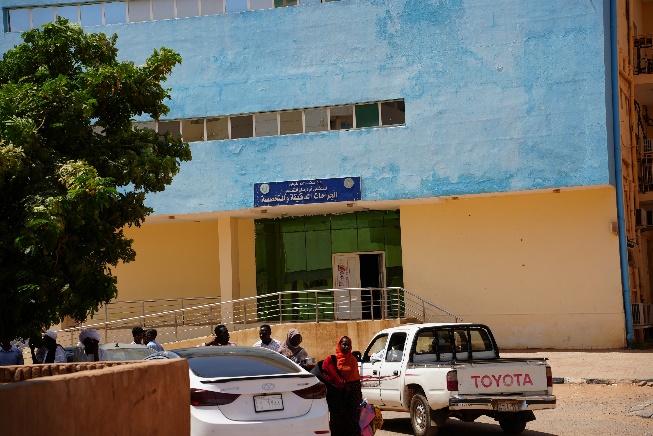
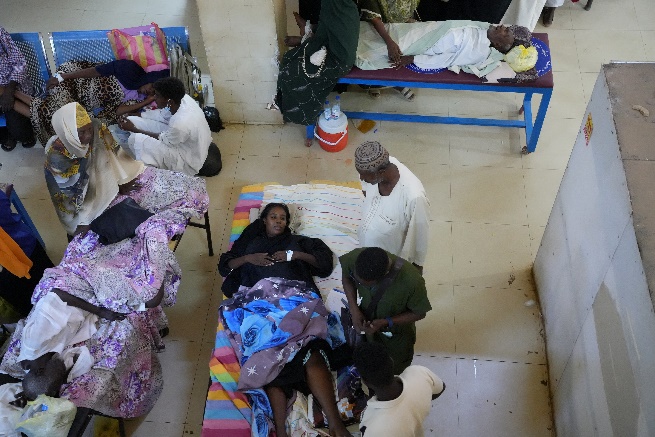
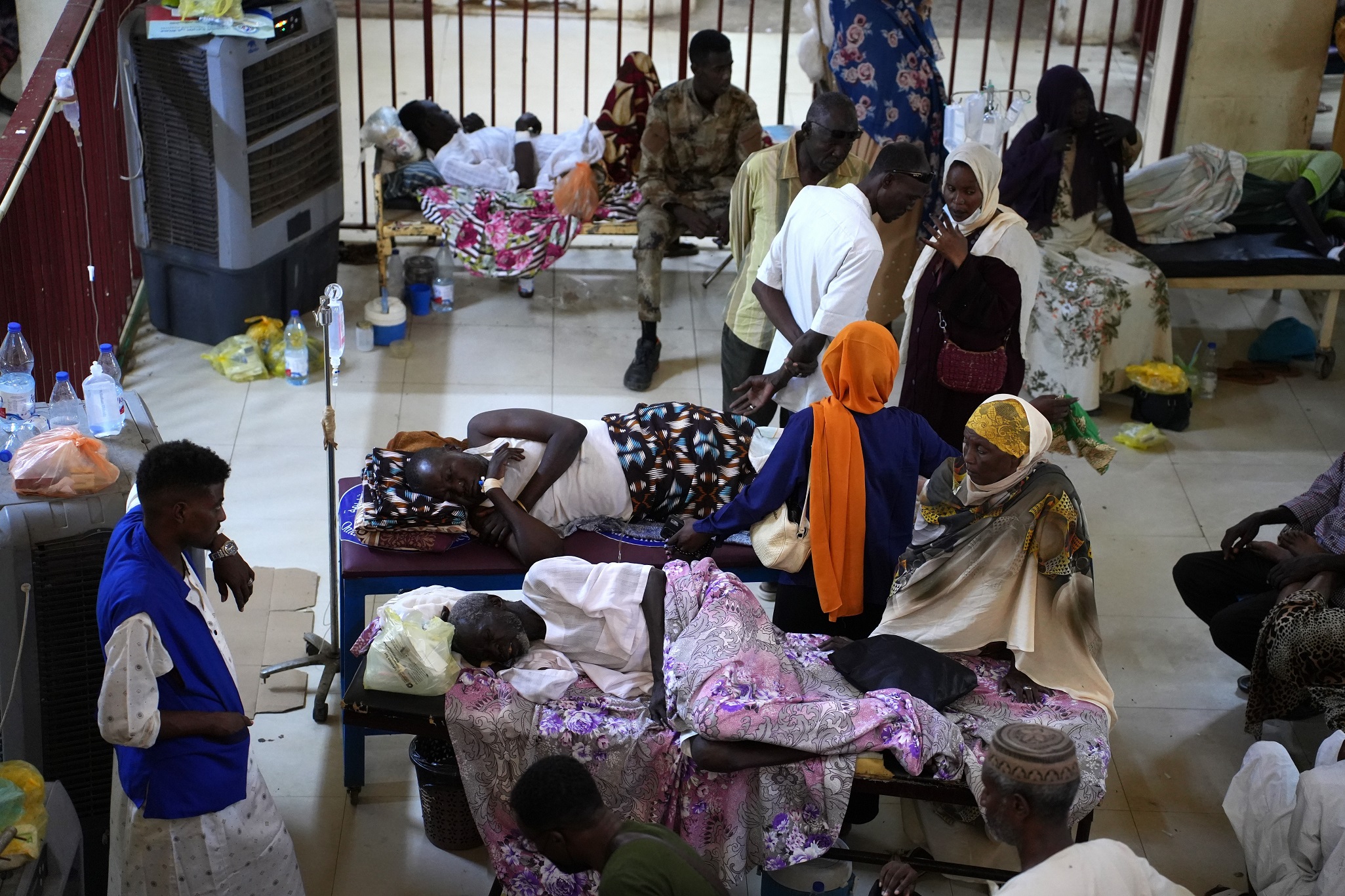
Omdurman Teaching Hospital, which has resumed operations, is experiencing significant overcrowding after most departments reopened.
The Omdurman Hospital director stated that KSRelief is providing support to the ICU, with 16 rooms expected to become operational soon. In addition to acute shortages of electricity and fuel, the hospital has a shortage of medical oxygen, exacerbated by the shutdown of Khartoum’s main oxygen plant. Once fully operational, the intensive care unit will require 96 oxygen cylinders per day, at a cost of $10 per cylinder. Omdurman Hospital is currently operating 600 beds, despite having an overall capacity of 800.
As our investigation progressed, we noted an unexpected expansion of medical services in peripheral areas; a reversal of long-standing patterns that once forced residents of the peripheries to travel to central Khartoum for treatment. This shift seems to be a reflection of policies adopted by the Khartoum State Ministry of Health. Dr. Ahmad Al-Bashir, Director of Preventive Medicine Department, confirmed that the rehabilitation and reopening of hospitals and medical centers is being prioritized in densely populated areas, rather than based on the pre-war distribution and conditions of health facilities.
As life in Khartoum moved outward within the early months of the war, the city center was largely abandoned. The once-neglected outskirts began to offer a full range of services, and small medical facilities that previously saw no more than 10 patients per day have now become a vital destination for numerous residents.
Catastrophic Conditions… Persistent Needs
According to WHO reports from March 2025, more than 20 million Sudanese face urgent humanitarian needs. The United Nations has sought to raise $4 billion to respond to Sudan’s health emergency. The crisis has been classified as the world’s largest displacement emergency, with approximately 12 million people displaced, 53 percent of them children. Additionally, half of the Sudan’s population is grappling with severe food insecurity.
As displacement waves intensified and spread wider, conditions were conducive to infectious outbreaks across Sudan, reaching alarming levels after more than two years of war. Several febrile illnesses have been reported, and the cholera epidemic alone has claimed 2,500 lives. Under this fragile health system, vaccination services have been largely undermined, even coming to a complete halt in some areas. In result, measles infections have surged, with 5,000 cases recorded between April and September 2023, according to the WHO. An estimated 1,200 children have died, likely due to a combination of measles and malnutrition.
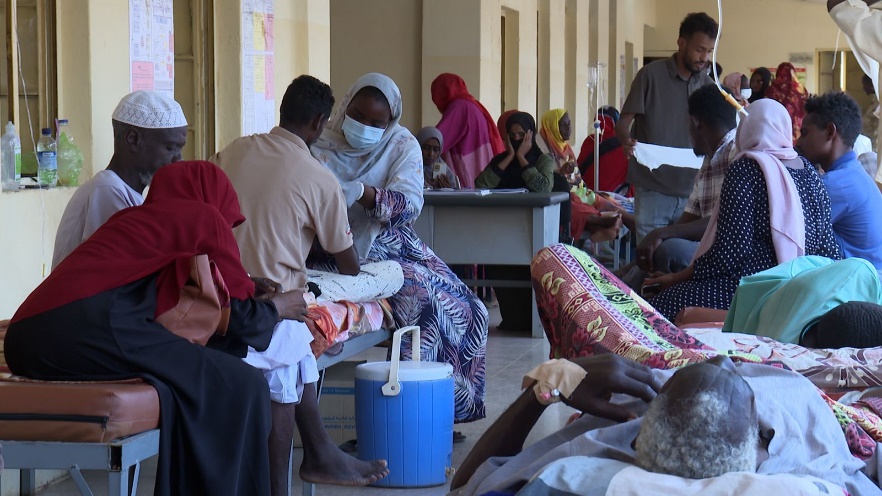
Alban Jadeed Hospital in the El-Haj Yousef district of Khartoum recorded three fatalities resulting from a technical error during the preparation of vaccine doses, according to statements issued by the Ministry of Health in August 2025. Media reports indicated that the diluent used for the measles vaccine had been accidentally mixed up with other medical solutions in the medical director’s refrigerator. This refrigerator was being used by the vaccination department after a power outage disabled another refrigerator designated for vaccines.
Dengue fever has spread widely across the states of Khartoum and Al-Jazirah in recent months. The Khartoum State Ministry of Health has officially recorded 13,692 cases, with a relatively low fatality rate. The ministry’s figures were much lower than those cited by neighborhood committees and local civil society groups, and the discrepancy has raised skepticism about underreporting. Al-Jazirah State has also been hit by an outbreak of hepatitis A.
Even before the war, Sudan’s health system was fragile on many levels. It suffered from chronic underfunding, with health expenditures barely reaching 10 percent of the national budget. This gradually undermined the public health sector while the private sector expanded rapidly. For most citizens, healthcare became increasingly inaccessible, particularly as poverty rates skyrocketed during the war, going from 21 percent to a staggering 71 percent. According to the most recent official data, 23 million of Sudan’s estimated 50 million people now live below the poverty line.
War conditions were conducive to infectious outbreaks across Sudan, reaching alarming levels after more than two years of war. Several febrile illnesses have been reported, and the cholera epidemic alone has claimed 2,500 lives. Measles infections have surged, with 5,000 cases recorded between April and September 2023, according to the WHO. An estimated 1,200 children have died, likely due to a combination of measles and malnutrition.
The WHO estimates that available medical services currently meet only a quarter of Sudan’s actual health needs. As shortages have worsened in recent months and funding has continued to be scarce, the health sector continues to face sizable challenges, with the strain falling most heavily on people with chronic illnesses and on women. The United Nations Population Fund estimates that 105,000 pregnant women across Sudan struggle to access care due to the closure of maternity wards and shortages of essential medications.
Shadha, a 25-year-old newly-married woman, describes the harrowing experience of giving birth to her first child in the city of Bahri, which at the time was under the control of the RSF. She had remained in the city with her husband who was caring for his elderly father. As her due date approached, there were no functional hospitals in the city. With no alternative in sight, Shadha gave was forced to give birth at a midwife’s home, in a high-risk environment that lacked appropriate medical conditions.
In October 2024, the Ministry of Health announced an alarming spike in maternal and infant mortality rates. It reported 295 deaths per 100,000 birthing mothers and 51 deaths per 1,000 newborns, respectively. Doctors Without Borders (MSF) further warned that maternal mortality recorded between January and August 2024 in just two hospitals (both supported by the organization) in South Darfur accounted for more than 7 percent of all maternal deaths documented by the organization worldwide in the year 2023.
The Rise of the Peripheries
For decades, Khartoum was the exclusive heart of a centralized health system, monopolizing advanced medical services and attracting patients from across the country. The war turned this model upside down. The capital turned into ruins, and migration patterns reversed as people sought healthcare services in new destinations, revitalized by the conditions of war.
The Slums of Khartoum: On Life’s Edge
21-05-2022
Nile State in northern Sudan is one such example. The underdeveloped region that once suffered from limited services has become a refuge, because it was mostly spared from direct fighting. Residents who once had to wait more than two months to see a specialist in Khartoum can now find appointments much more quickly, as many medical offices have relocated from the capital to safer regions. Thus, medical services in the River Nile State have improved significantly during the war.
At Atbara Police Hospital in the River Nile State, the transformation is clear. Originally a modest facility handling uncomplicated cases and routine deliveries, it has evolved into a regional medical hub providing services to patients from all parts of Sudan. The hospital’s director, Dr. Al-Walid Mahjoub, explains that the hospital had to overcome major obstacles to expand its services in the current state of the county. These services include the procurement of radiology and laboratory equipment and the purchase of generators to compensate for the unreliable public power grid. Gradually, the hospital has grown from a single operating room into a medical complex that offers orthopedic, neurosurgical, vascular, and other specialized surgical services (including plastic surgery and maxillofacial surgery), in addition to intensive care units for cardio resuscitation. It is worth noting that the majority of these services were established in the River Nile State during the two years of the war. The hospital now operates more than 200 beds and 11 operating rooms and treats up to 750 patients each day.
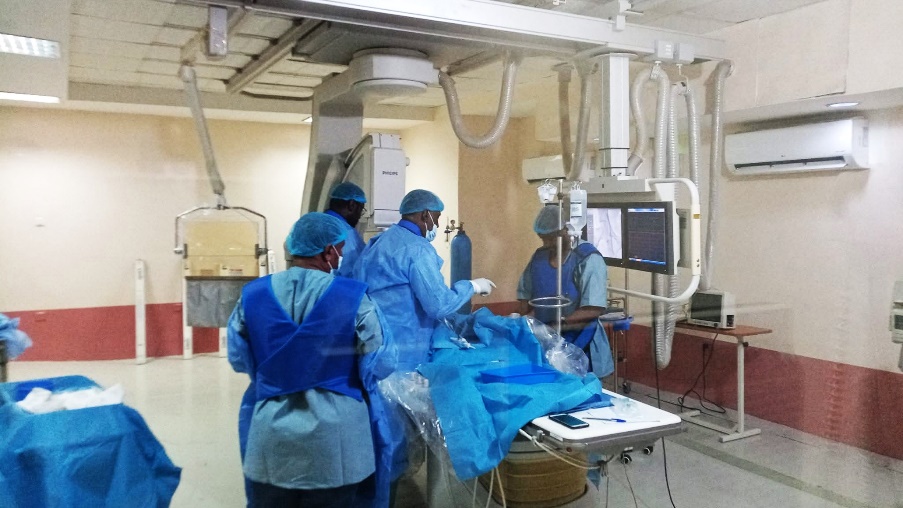
But the most dramatic transformation has taken place in a small hospital in the rural southwest of the River Nile State. Since its opening in 2008, Al-Jakayka Hospital was a simple health clinic, offering an average of just 15 non-urgent consultations per day. Its services were limited to treating fevers and minor infections, monitoring chronic illnesses, and tending to scorpion stings which are common in the region. After the war, the facility became a referral hospital, significantly expanding its range of services. Its medical teams have recently accomplished a complex medical achievement by separating an Ischiopagus parasitic twin.
The Ministry of Health had focused its efforts on enhancing the facilities and services of Al-Jakayka Hospital to relieve some pressure from overwhelmed hospitals in Omdurman. It was reopened in late 2023, equipped with specialized medical equipment, and staffed across all departments. The River Nile State has benefited from the relocation of medical professionals, many of them displaced from Khartoum. Having largely escaped direct fighting, the state was fertile ground for booms in economic activity and services. Before the war, the River Nile State’s population stood at approximately 1.5 million. As the conflict expanded, it became a major destination for displaced people, with its population reaching 6 million before the army regained control of Al-Jazirah and Sennar states.
In Khartoum, the state’s Ministry of Health was able to reopen several hospitals despite extremely limited budgets and poor basic services. However, amid the general ongoing instability, services remain insufficient and hospitals are understaffed. Census and needs-assessments are still underway, according to the Director of Therapeutic Medicine at the Khartoum State Ministry of Health. The capital, Khartoum, is projected to face mounting challenges if it sees accelerating waves of voluntary returns in the near future.
____________
Translated from Arabic by Sabah Jalloul.
____________
*The video and photographs in this investigation are the property of Assafir Al-Arabi.